Decision paper · not sales collateral
How should we charge CMS platforms?
A commercial model for a full-catalogue, rights-aware art integration when Vieunite cannot reliably observe the partner’s downstream terminal estate.
Executive recommendation
Charge for the commercial boundary we can define and enforce.
The strongest unit of account is one customer-facing CMS product or white-label brand, represented operationally by a Vieunite tenant.
Sell a non-exclusive annual platform licence with the same eligible catalogue for every partner. Add a one-off implementation fee and protect margin through a measurable infrastructure-cost review—not an unverifiable device count.
Standard target: £12,000 per CMS product or brand, paid annually in advance.
Implementation: £3,000 once, with custom development separately scoped.
Catalogue: no commercial content tiers. Eligibility can still vary for rights, safety and attribution reasons.
No pilot: contract from day one, with implementation acceptance rather than discounted trial pricing.
Bill what we know
We know the contracting company, CMS product, brand, tenant, credentials, API traffic and delivery cost.
Do not bill what we cannot audit
Vieunite does not own the device registry and cannot independently verify screens, players or end customers.
Do not suppress adoption
A flat annual licence lets the partner distribute art widely without making every deployment a billing event.
Keep content policy separate
Commercial packaging should not be confused with legal eligibility, rights expiry, safety or credit-display capability.
Facts before pricing
The business model has to respect the actual integration.
These are current product facts or explicit management constraints. They are not assumptions invented for the price model.
Each integration has a tenant, revocable credentials, registered browser origins and scopes. Billing was intentionally left attachable to this boundary. R1
Plans do not restrict catalogue content; publication, rights, safety, attribution capability and scopes still apply. R1
The hosted Picker uses short-lived capabilities and server-side redemption, preserving a clean CMS-to-Vieunite trust boundary. R2
This is a dated operational snapshot, not a guaranteed catalogue commitment or a pricing tier. R3
The integration sees the CMS tenant and requests. It does not own the CMS’s end-customer or playback-device registry.
The commercial offer must stand as an annual production agreement; technical acceptance belongs in implementation milestones.
Observable and contractible
- ✓Legal entity, named CMS product and customer-facing brands
- ✓Tenant IDs, credentials, registered origins and authorised scopes
- ✓Picker sessions, redeemed selections, API calls and asset delivery
- ✓Direct hosting, support and custom-engineering cost
- ✓Territory, field of use, exclusivity and contract term
Not independently observable
- ×Total terminals, screens or media players controlled by the partner
- ×Whether one cached delivery later appears on one or thousands of screens
- ×Partner end-customer pricing unless contractually reported
- ×Offline playback frequency after a legitimate asset delivery
- ×True audience impressions without a separate proof-of-play contract
What exists today
This is more than an image feed.
The commercial asset is a governed integration workflow: discovery, rights-aware selection, durable reference storage, current-state resolution and controlled delivery.
Search, filters, previews, rendition choice and multi-select inside the CMS editing workflow.
The CMS persists provider, artwork ID and opaque rendition key—not a temporary URL or copied record.
Metadata, rights, credits, availability and the selected version are revalidated when needed.
Approved media is delivered without exposing private storage paths or long-lived capabilities.
Commercial implication: the licence grants access to a maintained service and governed rights workflow. It is not a sale of a static image archive.

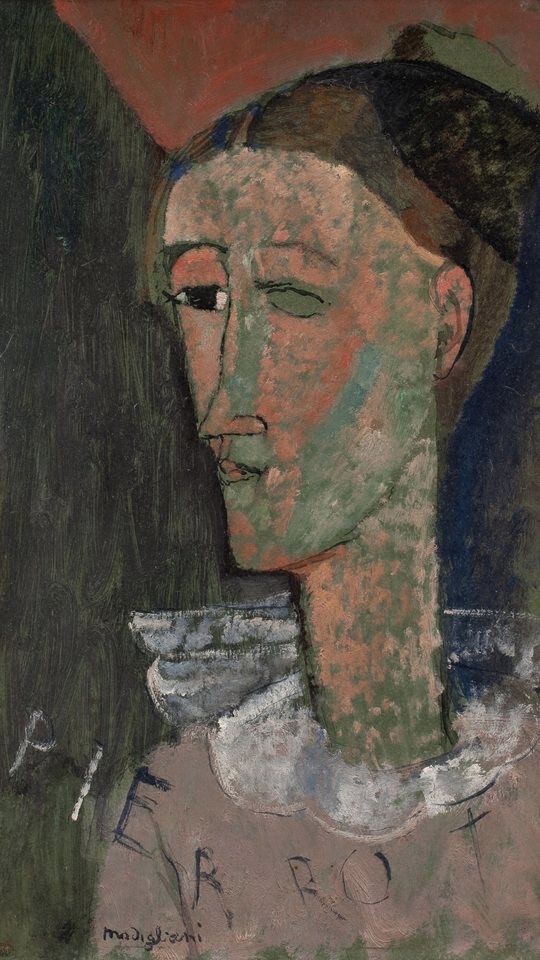


Live Preview thumbnails shown as product evidence. Artwork availability and metadata can change; credits above reflect the API snapshot retrieved 11 August 2026. R3
What the customer is buying
Do not lead with catalogue size.
Open-access institutions already make millions of digital assets available. Our defensible value is reducing the CMS partner’s product, rights and operating burden.
“Curated, display-ready art with the workflow and governance required to use it safely inside a CMS.”
The Smithsonian advertises more than 5.1 million reusable digital items, while the Art Institute of Chicago offers a public API and more than 50,000 open-access images. R8 R9
That makes raw image volume a weak standalone moat. The commercial story must explain why integration quality, curation, rendition readiness, current-state rights checks and accountable operations are worth paying for.
Editorial utility
A picker designed for CMS editors, with meaningful filters, previews and selectable versions—not a raw institutional database.
Rights governance
Eligibility, expiry, attribution requirements and restricted uses live with the canonical artwork record and can be revalidated.
Display readiness
Artwork versions expose actual delivery geometry, orientation and opaque rendition identity suitable for signage workflows.
Integration speed
The hosted SDK, CMS bridge contract and same-origin redemption flow reduce security and implementation work for the partner.
Lifecycle control
Durable references allow updates, takedowns, rights changes and asset replacement without copying the full catalogue into each CMS.
Accountability
A contracted provider can supply support, change notices, audit evidence and a defined rights process that a collection of free APIs does not combine.
If Vieunite sells “access to lots of art,” procurement can compare it with CC0 repositories at £0. If Vieunite sells a maintained, rights-aware editorial and delivery layer for signage, the comparison shifts from asset count to avoided work, product differentiation and operational assurance.
Public market benchmarks
CMS vendors monetise screens. We do not need to copy their meter.
Public prices demonstrate the economic value of a deployed screen to the buyer. They do not give Vieunite an auditable screen count.
| CMS provider | Public annual-billing price | Observed metric | Implication |
|---|---|---|---|
| ScreenCloud R4 | US$24 Core / US$36 Pro per screen per month | Screen | The partner can already monetise distribution volume. |
| Yodeck R5 | £7 Basic / £10 Premium / £13 Enterprise per screen per month | Maximum monitors in account | Even low-cost platforms have a recurring screen yield. |
| OptiSigns R6 | £6.92 Standard to £31.25 Enterprise per screen per month | Screen; 25-screen Enterprise minimum | Wide willingness-to-pay range reflects service and deployment depth. |
| Fugo R7 | US$20 Essential / US$30 Core / US$40 Enterprise per screen per month | Screen | API and custom development sit at the enterprise end. |
Public list prices are snapshots, exclude negotiated discounts and are not directly currency-normalised. Retrieved 11 August 2026.
The CMS may keep charging its customers per screen, location or subscription tier. Vieunite can charge the CMS a predictable wholesale platform licence. The partner retains its retail margin and does not need to expose its device estate.
Choosing the unit of account
A good metric must be legible, controllable and measurable.
Usage pricing fails when the customer cannot predict the bill or the supplier cannot accurately meter the unit. Stripe makes the same distinction in its guidance. R10
Commercial alternatives
Five plausible models, one practical default.
The answer should be a default contract architecture, with explicit exceptions—not a different pricing invention for every partner.
| Rank | Model | How it works | Strength | Failure mode | Use |
|---|---|---|---|---|---|
| 1 | Annual product / brand licence | One recurring fee for one named CMS product or white-label brand; full eligible catalogue included. | Predictable, auditable, simple, aligned to tenant boundary. | Can under-monetise a very large partner without scope and cost guardrails. | Default |
| 2 | Minimum guarantee + revenue share | Annual floor plus a percentage of identifiable Vieunite add-on revenue. | Captures upside and aligns both parties. | Fails when art is bundled, transfer pricing is opaque or reports are unauditable. | Named paid add-ons only |
| 3 | Annual licence + delivery overage | Base licence includes generous delivery; only extraordinary measurable cost triggers review or overage. | Protects gross margin. | Can create bill anxiety if the threshold is framed as ordinary usage pricing. | Cost guardrail |
| 4 | Company / portfolio licence | One fee covers a defined number of products or brands owned by one group. | Efficient for strategic multi-brand buyers. | Scope creep if “brand,” affiliate and white-label rights are vague. | Enterprise expansion |
| 5 | Per screen, artwork or impression | Partner reports downstream deployment or playback units. | Can align closely to end-market value. | Unverifiable, high administration, discourages adoption and creates disputes. | Reject |
API requests are measurable but not a reliable value metric here. A well-cached integration may create more screen value with fewer requests than a poorly engineered one. Charging per request would reward inefficient implementations and penalise efficient ones.
Recommended commercial architecture
One catalogue. A small number of commercial levers.
Differentiate scope, service and exclusivity—not which artworks a customer is allowed to browse because of price.
per year · per CMS product or white-label brand · paid annually in advance
- Full eligible catalogue: all published works permitted by rights, safety, attribution capability and scope.
- Standard platform access: hosted Picker, reference resolve, signed asset delivery, sync/webhook capabilities and production tenant.
- Standard support: documentation, email support and reasonable integration guidance.
- No terminal reporting: no screen declarations, player SDK or downstream device audit.
- Non-exclusive: no territory, vertical or customer exclusivity unless separately priced.
| Commercial item | Working price | Scope and rationale |
|---|---|---|
| Standard annual platform licence | £12,000 / year | Target transaction price for one named CMS product or white-label brand. |
| External list / opening anchor | £15,000 / year | Creates negotiation room without changing the product. Any discount must be exchanged for term, prepayment or strategic value. |
| Internal approval floor | £9,000 / year | Not advertised. Requires written approval and a concrete exchange; never justified by “small terminal count,” which cannot be verified. |
| Implementation and launch | £3,000 once | Configuration, production credentials, two technical workshops, integration review and go-live acceptance. Custom code is excluded. |
| Portfolio licence | £30,000 / year | Up to three named CMS products or brands under one corporate group; additional brands at £6,000 each. |
| Premium operational package | £6,000 / year | Named service owner, quarterly service review and enhanced response targets. Offer only after operations validates the SLA. |
| Named paid add-on model | £12,000 minimum + 10% | 10% of net Vieunite-attributable add-on revenue above the minimum guarantee, with reporting and audit rights. |
| Exclusivity | From 3× standard fee | Minimum starting point for narrowly defined field/territory exclusivity, plus performance commitments and automatic reversion. |
| Custom engineering | Separate SOW | Any non-standard integration, migration, UI, data transformation or bespoke operational obligation. |
“CMS Product” / “White-label Brand”
A separately marketed software service, customer-facing product identity or white-label deployment through which end customers can select, manage or display Vieunite content.
Separate domains, branding, commercial price books, reseller identities or independent end-customer portals are evidence of separate billable Products—even when they share the same codebase.
One Product may serve unlimited editors, customer accounts and terminals under the standard licence, subject to permitted use and the infrastructure-cost guardrail.
- Same eligible catalogue
- Hosted Picker and SDK
- Durable reference resolve
- Standard signed delivery
- Rights and availability updates
- Standard documentation and support
- Additional products and white-label brands
- Exclusivity, territory or vertical restrictions
- Custom development and data migration
- Enhanced SLA or named service management
- Extra legal warranties or indemnity
- Extraordinary direct delivery cost
Working scenario calculator
Make the assumptions visible.
This model is for internal sensitivity testing, not a forecast. Replace direct cost and overhead assumptions with finance data before approval.
Recurring revenue sensitivity
Excludes implementation fees, portfolio mix, premium operations, revenue share, discounts, churn, tax and foreign exchange.
Do not publish ordinary per-GB overages yet. Define a contract review trigger when a partner’s annualised direct delivery and support cost exceeds 15% of its annual licence for three consecutive months. Give advance notice and agree a revised fee for the next period; do not surprise-invoice retrospective usage.
Commercial guardrails
The contract prevents scope leakage.
A simple headline price only works if product, brand, permitted use and exceptional cost are defined with equal simplicity.
Annual commitment
Twelve-month initial term, paid in advance. Implementation acceptance does not delay the licence start beyond an agreed long-stop date.
Predictable uplift
Auto-renew annually with a stated renewal escalator. Working proposal: 3%, with material scope changes separately repriced.
Named product and brands
Schedule every permitted product, domain and white-label brand. Affiliates are excluded unless named.
Digital display only
Permit selection and display through the contracted CMS. Exclude standalone asset resale, print merchandise, model training and archive extraction.
No permanent asset library
The CMS stores durable references and legitimate caches, then resolves current state. It may not build an independent substitute catalogue.
Takedown and change control
Vieunite can remove or replace content when rights, safety or source status changes; the CMS must consume updates within an agreed period.
Exceptional-use review
Use direct attributable infrastructure and support cost—not screen count—as the evidence for a future commercial review.
Every concession has an exchange
Discount only for longer term, advance payment, constrained scope or measurable strategic value. Never discount for an unverifiable “small fleet.”
Clean termination
Revoke credentials, stop new delivery, remove cached assets within a defined period and preserve only records required by law or audit.
Use an implementation schedule with objective technical acceptance: credential setup, origin registration, session creation, selection redemption, reference persistence, rights/credit handling, signed delivery and takedown behaviour. Commercial production access begins under the annual agreement.
Licensing and content governance
“Same content” cannot mean “ignore rights.”
All customers should receive the same commercial catalogue proposition. The actual eligible set can still change because the law, licence terms and host capabilities are different from pricing tiers.
Published
The work is approved and visible in the canonical catalogue.
In term
Availability and rights have not expired or been withdrawn.
Permitted use
Digital display through the partner falls within the licensed field and territory.
Host capable
The CMS can meet mandatory attribution or other presentation conditions.
Deliverable
The selected rendition has a current approved asset and can receive signed delivery.
- No Basic / Premium artwork catalogue
- No price-based collection levels
- No paywall for particular artists or genres by default
- No per-selection or per-artwork fee in the standard offer
- Rights expiry and source takedown
- Territory or field-of-use restriction
- Attribution-display capability
- Safety, audience or sensitivity policy
- Asset/rendition availability
UK IPO guidance treats a licence as permission to perform acts that would otherwise infringe IP and notes that scope may include field of use, territory and duration. The price book therefore cannot be final until counsel confirms Vieunite’s right to sublicense each content class through third-party CMS platforms. R12
What could invalidate the model
The biggest risks are not visual or technical.
The price is a working recommendation. Rights scope, direct cost and willingness-to-pay still require explicit evidence.
| Risk / evidence gap | Level | Why it matters | Mitigation before broad sales |
|---|---|---|---|
| Insufficient sublicensing rights | High | A technical entitlement cannot grant legal display rights that Vieunite does not possess. | Rights matrix by source, territory, field of use, attribution, term and downstream sublicense. |
| £12k willingness-to-pay unvalidated | High | Public CMS pricing shows buyer economics, not demand for this specific art integration. | Use the £15k anchor / £12k target in real annual-contract negotiations and log objections, concessions and outcome. |
| Unknown direct delivery cost by tenant | High | A large partner can erode margin even if terminal count remains unknown. | Cost attribution dashboard for asset bytes, request class, storage, support time and exceptional operations. |
| Open-access substitution | Medium | Free institutional APIs weaken a catalogue-volume pitch. | Sell curation, display readiness, workflow, rights governance and lifecycle control; measure integration time saved. |
| One licence used across many white labels | Medium | Ambiguous product scope can erase expansion revenue. | Named product/brand schedule, domain register and annual certification—without device reporting. |
| Premium SLA exceeds operational maturity | Medium | Service credits and response commitments can create loss and reputational damage. | Operational readiness review before offering the £6k package. |
| Catalogue depth or freshness disappoints | Medium | A full-catalogue promise is less valuable if selection breadth or change cadence is weak. | Publish catalogue health metrics and avoid guaranteed minimum counts unless operations can support them. |
| Metering creates privacy or trust concerns | Low | Over-collection would undermine the “no terminal reporting” advantage. | Measure only tenant-level service use and cost required for security, operations and billing guardrails. |
Likely buyer objections
01“We are small. Why should we pay the same as a large CMS?”
The licence buys the same production integration, catalogue governance and rights service. Use the internal floor only in exchange for term or scope; do not create a fleet declaration we cannot audit.
02“There is free museum art online.”
Agree. The value is not mere file access. It is curated suitability for signage, selectable renditions, integration UX, current-state rights checks, controlled delivery, support and lifecycle management.
03“We want to bundle it for free.”
That is compatible with the annual licence. Revenue share is unnecessary unless Vieunite is sold as a named paid add-on.
04“Can we have exclusivity?”
Only for a narrow field and territory, with at least a three-times fee starting point, performance minimums and automatic conversion to non-exclusive rights if commitments are missed.
Likely internal objections
01“A large partner could deploy to unlimited screens.”
Yes. That is an intentional adoption benefit. Protect margin through product/brand scope, direct-cost monitoring and renewal repricing—not unverifiable screen audits.
02“Why not charge per API call?”
Requests reflect implementation and caching as much as value. Use API and delivery data to protect cost, not as the principal commercial story.
03“Why no content tiers?”
Content tiers create entitlement complexity, weaken the full-library proposition and encourage buyers to negotiate artwork by artwork. Service and commercial scope are cleaner levers.
04“Is £12k proven?”
No. It is a reasoned target anchored to market economics and the integration boundary. The document deliberately marks willingness-to-pay as an evidence gap.
Management agenda
What needs to be agreed.
Approval should resolve these points before the model becomes a customer-facing price sheet or contract template.
-
Primary unit of accountPropose: approve
Confirm one named CMS product or white-label brand as the billable unit, independent of terminals.
-
Price corridorPropose: approve
Approve £15k opening anchor, £12k standard target and £9k internal approval floor.
-
Implementation feePropose: approve
Confirm £3k scope and define the boundary between included guidance and a paid custom SOW.
-
Catalogue policyPropose: approve
Confirm no commercial content tiers while preserving rights, safety, capability and delivery eligibility controls.
-
Portfolio and white-label definitionPropose: review wording
Approve £30k for three brands and £6k for each additional brand; validate wording with counsel.
-
Extraordinary-cost triggerPropose: finance input
Approve the 15% annualised direct-cost review trigger or replace it with finance’s preferred margin rule.
-
Rights scopePropose: legal gate
Confirm downstream CMS sublicensing, territories, digital-display field of use, attribution and takedown terms by content source.
-
Premium operationsPropose: ops gate
Decide whether the organisation can presently offer enhanced response targets and service credits.
-
Revenue-share exceptionPropose: approve
Allow only where Vieunite is a named, separately priced add-on with auditable net revenue.
-
No-pilot policyPropose: approve
Use annual agreements and implementation acceptance; do not introduce discounted trials.
Sources and method
Evidence behind the discussion.
External prices are dated snapshots and may change. Internal product facts were checked against the current repository and production Preview surface.
| Ref | Source | Evidence used | Decision relevance |
|---|---|---|---|
| R1 | Vieunite Collection developer documentation | Tenant boundary, production API surface, catalogue policy and current integration concepts. | Supports licensing the tenant/product rather than browser users or downstream devices. |
| R2 | Vieunite Picker integration guide | Hosted SDK, backend bridge, one-time browser capabilities, redemption, durable reference and host capability boundary. | Defines the deliverable and confirms that the CMS backend—not its screen estate—is the trust boundary. |
| R3 | Vieunite production Preview API | 198 public Preview artworks and live example metadata/assets as retrieved 11 August 2026. | Provides a dated product snapshot; should not become a guaranteed price tier or catalogue floor. |
| R4 | ScreenCloud pricing | Core US$24 and Pro US$36 per screen/month billed annually; Enterprise annual/custom. | Evidence that CMS buyers already monetise the downstream screen as a recurring unit. |
| R5 | Yodeck pricing | £7 Basic, £10 Premium and £13 Enterprise per screen/month; pricing based on maximum monitors. | Provides lower-cost buyer revenue benchmarks and a clear device-based retail model. |
| R6 | OptiSigns pricing | Annual prices from £6.92 Standard to £31.25 Enterprise per screen/month; Enterprise minimum 25 screens. | Shows the broad buyer price range and supports the screen-revenue equivalence illustration. |
| R7 | Fugo pricing | US$20 Essential, US$30 Core and US$40 Enterprise per screen/month billed annually; API at Enterprise. | Shows integrations and API access associated with higher-value CMS packaging. |
| R8 | Smithsonian Open Access | More than 5.1 million 2D and 3D digital items available for reuse; CC0 items can be reused without permission. | Demonstrates that raw content volume is not a sufficient paid differentiation. |
| R9 | Art Institute of Chicago Open Access and Public API | More than 50,000 unrestricted public-domain images and a public REST/IIIF integration surface. | Strengthens the case to sell workflow, governance and display readiness rather than asset count. |
| R10 | Stripe: usage-based pricing strategy | A value metric should scale with value, be legible before purchase and be clearly measurable; bad metrics reduce trust. | Supports rejecting terminal and request metrics that Vieunite or the buyer cannot predict and verify cleanly. |
| R11 | AWS CloudFront pricing | Delivery cost can be observed through requests and data transfer; AWS also offers flat-rate allowances and custom pricing. | Supports tenant-level infrastructure-cost monitoring as a margin guardrail rather than headline screen pricing. |
| R12 | UK Intellectual Property Office: licensing IP | A licence grants permission for otherwise restricted acts; terms can define fees, field of use, territory and duration. | Supports explicit product, territory, permitted-use, exclusivity and term definitions in the CMS agreement. |
Method
Recommendation formed from: current product/architecture evidence; explicit constraints supplied by management; public CMS list-price comparisons; open-access substitutes; general value-metric guidance; and a simple commercial sensitivity model.
Limitations
No customer interview data, signed deal history, tenant-level cost allocation, audited rights matrix or legal opinion was available for this paper. Prices are therefore proposals for internal approval, not claimed market-clearing facts.